Does Domain Age Matter for SEO? Myths vs. Facts
Many people believe an older domain ranks higher on Google. The truth is more interesting, and it changes how you should think about buying domains.
"Buy an old domain, it'll rank faster." You'll hear this advice in SEO groups all the time. But is it true? Let's separate what Google has actually said from the myths.
What Google says about domain age
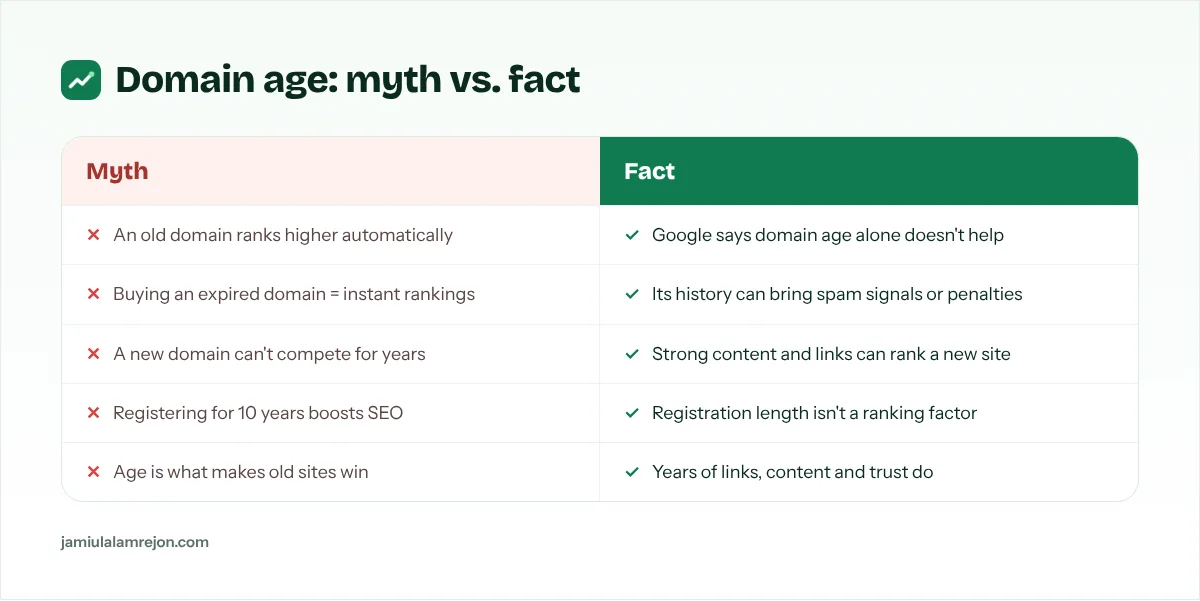
Google has been clear on this. Its Search Advocate John Mueller has said publicly that domain age doesn't help rankings. Google's systems don't give a site a boost simply because its domain was registered many years ago.
The same goes for registration length. Registering your domain for 10 years instead of 1 is good for avoiding accidental expiry, but it's not a ranking signal.
So why do old websites often rank better?
Because they've had time to build what actually matters:
- Backlinks: a site that's been around for 15 years has usually collected links from other websites, and links remain one of Google's strongest signals.
- Content: older sites often have hundreds of useful pages covering many search questions.
- Brand searches and trust: people know the name, search for it directly and click it in results.
- Topical authority: years of publishing on one subject help Google understand what the site is an expert in.
In other words, age is a correlation, not a cause. It's the work done over those years that ranks, not the date on the registration record.
The risk of buying expired or "aged" domains
Some people buy expired domains hoping to inherit their old rankings. This can backfire:
- The domain may have hosted spam, adult content or a hacked site, and still carry those signals.
- It may have a manual penalty from Google.
- If the new website has nothing to do with the old one, Google treats it as a fresh start anyway, and spam policies specifically target expired domain abuse, where old domains are used to host low-quality content.
Before buying any used domain, check its history:
- Use the free Domain Age Checker to see when it was first registered and when it was last changed.
- Look at old versions of the site on the Wayback Machine.
- Check its backlinks with an SEO tool, and look for spammy anchor text.
- Search
site:thatdomain.comon Google to see whether it's still indexed.
When domain age is genuinely useful
Domain age is still a helpful research and trust signal for people, even if it isn't a ranking factor:
- Spotting scams: an online shop claiming "15 years in business" on a domain registered last month is a red flag.
- Vetting suppliers or partners: an established domain suggests a real, established business.
- Competitor research: knowing how long a competitor has been building their site helps you set realistic SEO timelines.
- Renewal checks: the expiry date tells you whether you're at risk of losing your own domain.
What to focus on instead
If you have a new domain, don't worry about its age. Focus on the things that do move rankings:
- A fast, mobile-friendly website that passes Core Web Vitals. See the technical SEO checklist.
- Helpful content that answers your customers' real questions.
- Quality backlinks from relevant local and industry websites.
- A complete Google Business Profile if you serve a local area.
- Monitoring in Google Search Console, so you can see what's working. Here's a beginner's guide.
The bottom line
An old domain is not an SEO shortcut. A new domain with a well-built website and a smart content plan can outrank an old, neglected one, and it often does.
Need an SEO plan for a new or existing website? See my SEO service or request a free audit.